
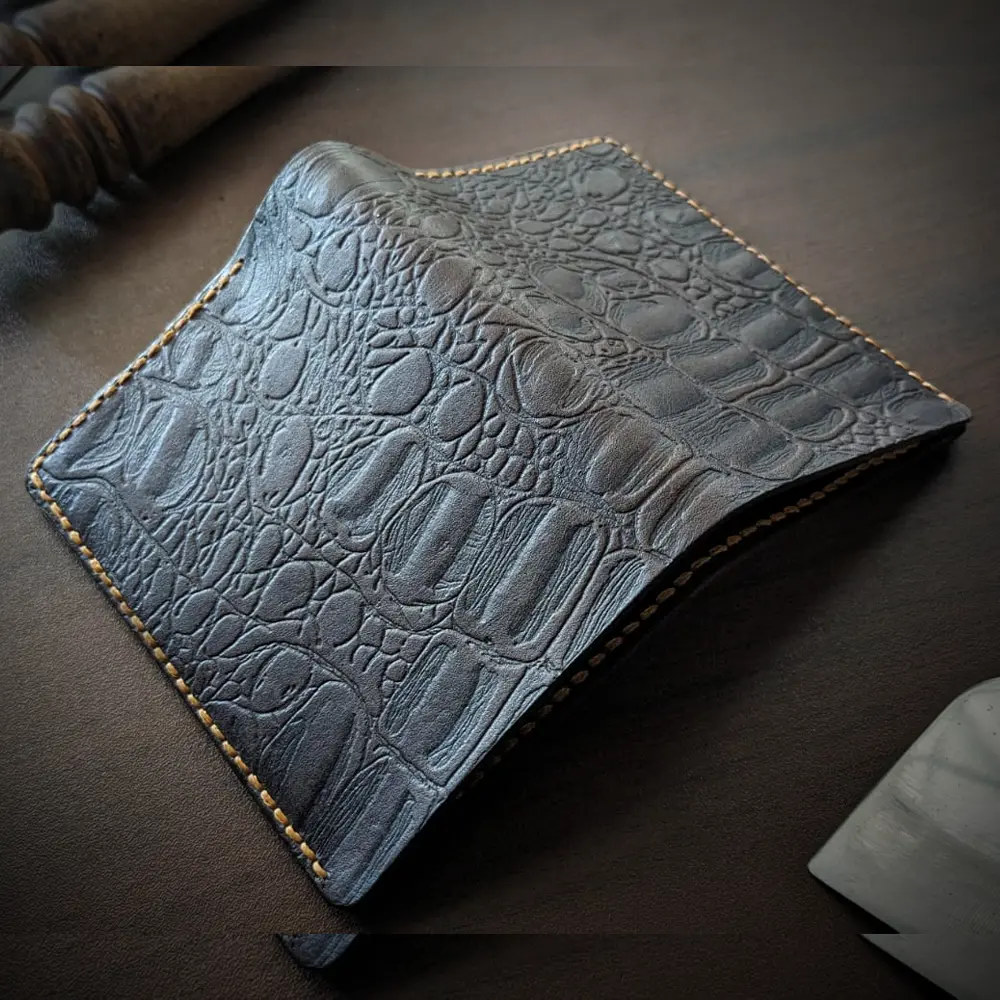
How to Choose leather..?
1. Understand Leather Types
Leather is categorized by its quality and finish. Common types include:
- Full-Grain Leather: Highest quality, retains natural texture, durable, and ages beautifully. Ideal for high-end products like bags, belts, and furniture.
- Top-Grain Leather: Slightly sanded and finished, smoother and more uniform, but less durable than full-grain. Good for wallets and accessories.
- Genuine Leather: Lower-quality leather made from the layers left after the top is removed. Affordable but less durable.
- Bonded Leather: Made from leather scraps bonded together, not as durable or authentic in appearance.
2. Check Leather Grades
- Aniline Leather: High-quality leather with no surface coating. It’s soft and natural but stains easily.
- Semi-Aniline Leather: Has a light coating for better protection while retaining a natural look.
- Pigmented Leather: Coated for durability and uniform appearance, but less natural in feel.
3. Examine the Leather’s Surface
- Look for a consistent, natural grain if it’s full-grain or top-grain.
- Check for imperfections, which can indicate authenticity in high-quality leather.
- Beware of overly shiny or uniform surfaces, which might indicate synthetic leather.
4. Smell the Leather
Genuine leather has a rich, earthy smell. Synthetic leather often has a chemical or plastic-like odor.
5. Perform a Flexibility Test
- Bend or flex the leather slightly. High-quality leather will show natural wrinkles or creases without cracking.
6. Consider Thickness and Weight
- Thicker leather is generally more durable but may be less flexible.
- Choose the thickness based on the intended use. For example:
- Thin leather for clothing or wallets.
- Thick leather for belts or furniture.
7. Evaluate the Finish
- Matte finishes often indicate more natural processing.
- Shiny finishes may have additional coatings, reducing breathability and aging potential.
8. Understand the Source
- Leather from specific animals (e.g., cowhide, sheepskin) has unique properties.
- Cowhide is durable, while sheepskin is softer and more pliable.
9. Purpose and Style
Choose leather that matches your intended use:
- Durable and rugged: Full-grain leather for outdoor bags or work boots.
- Flexible and soft: Sheepskin or top-grain for jackets and accessories.
- Affordable and stylish: Genuine leather for decorative items.
10. Budget
While high-quality leather is more expensive, it often provides better durability and aesthetics. Be wary of overly cheap leather goods.
11. Sustainability and Ethics
- Consider brands that source leather responsibly or use eco-friendly tanning processes.